
Looking for a Magic Alternative?
Wing Assistant matches you with a trained, full-time assistant in as little as 24–48 hours, offering a fast, structured alternative to Magic’s matching process.
⭐️ 4.7 average rating—Capterra & Google | 24–48 hr onboarding
Wing Assistant vs Magic:
Virtual Assistant Comparison
Drowning in busywork that never ends?
If you’re looking for support that actually frees up your time, not adds more oversight, this side-by-side comparison of Wing Assistant and Magic Assistant is here to help you choose.
Wing Assistant vs Magic: Key Differences
Wing Assistant and Magic take very different approaches when it comes to service structure, onboarding speed, pricing flexibility, and assistant role coverage.
Wing Assistant gives you a full-time, dedicated assistant backed by a support team and quality checks, with most clients onboarded in as little as 24–48 hours. Plans are flexible, assistants are trained across 25+ business roles, and results show up fast.
Magic executive assistant offers either a dedicated assistant or pooled on-demand help, with matching typically handled over two calls. While it suits general task delegation, the scope is narrower, and flexibility depends on your plan and how consistently your assistant integrates.
Wing Assistant vs Magic: Service Comparison
Here’s how Wing Assistant and Magic EA compare across key service categories for virtual assistant support.
| Category | Wing Assistant | Magic |
|---|---|---|
|
Pricing |
Flexible monthly plans, strong value |
Fixed tiers, billed every 4 weeks |
|
Model |
Managed, dedicated assistant |
Pooled or dedicated assistants with lighter centralized management |
|
Onboarding |
Approximately 24–48 hours or rapid setup |
Typically a few days to start |
|
Oversight |
QA and CSM supervision |
Self-managed or limited oversight |
|
Best For |
Teams scaling or delegating fast |
Individuals or smaller workloads |
TL;DR—Wing Assistant delivers scalable, managed support with oversight, while Magic virtual assistant suits lighter task loads with more hands-off structure.
Wing Assistant vs Magic: How Each Service Works
Wing Assistant and Magic assistant service both offer dedicated assistants, but only one wraps that support in a structured, performance-driven system built to scale with you.
What Is Wing Assistant?
Wing Assistant is a managed virtual assistant service that gives you a dedicated assistant to handle scheduling, inboxes, research, customer support, and repeatable tasks—plus training, quality checks, and direct support from a success manager.
It’s built for busy founders, execs, and operators who’ve hit a ceiling juggling everything themselves. Clients reclaim hours each week and shift their focus back to growth, not upkeep.
Unlike marketplaces or freelance VAs, Wing runs on a fully managed model with built-in systems and a managed workspace that supports consistent delegation and oversight.

What Wing Assistants Can Do for You
Wing Assistants keep your business operations on track while you focus on decisions, clients, and growth.
They manage:
- Inbox & calendar: daily flow without bottlenecks
- Client workflows: scheduling, follow-ups, coordination
- Internal systems: CRM updates, task tracking, reporting
As your needs grow, their virtual assistant support scales with you—adding structure across communication, ops, and execution.
Real Results: From Chaos to
Consistency
My Personal Mentors partnered with Wing Assistant to handle rising client volume and prevent follow-up delays.
- 30+ closed deals per month
- 3,600+ clients supported
- 48-hour turnaround time on inquiries
With managed support, the team kept up momentum and closed more deals without sacrificing service.
“Wing’s employees had great work ethic. They delivered what we asked for and communicated consistently.”
—Praateek Parashar, Co-Founder
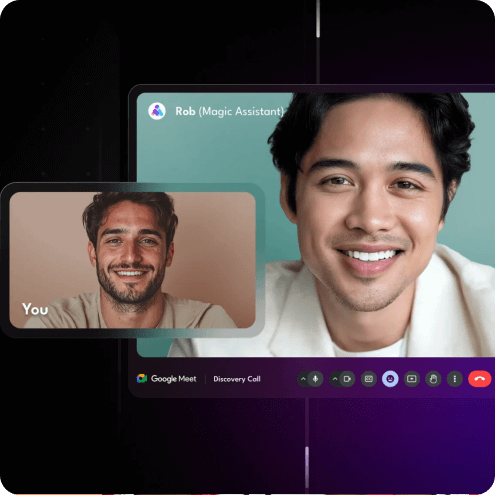
What Is Magic?
Magic is a virtual assistant service focused on task delegation through either Magic dedicated executive assistants or an on-demand pool. Its model centers around flexible access to pre-vetted remote talent, often sourced from a global remote talent pool.
The Magic onboarding process starts with a consultation call followed by a client-assistant match. Magic manages screening and payroll, but day-to-day oversight typically stays with the client, and setup may involve a few extra steps.
Magic plans are designed for solo founders, consultants, and businesses seeking fast, flexible support without long-term contracts. It’s best for smaller teams or lighter workloads where one-to-one arrangements work well.
What Magic Assistants Can Do for You
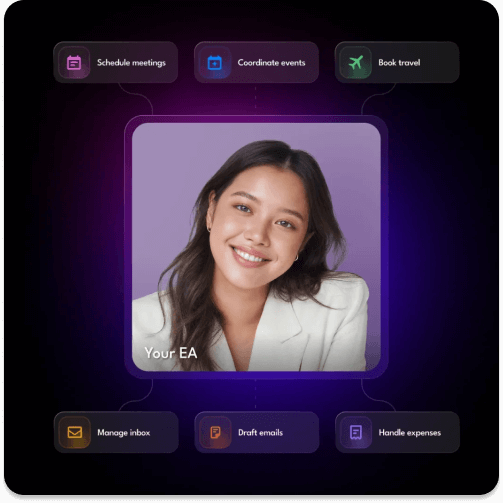
Magic assistants support executive, administrative, and specialized tasks, typically focusing on one core function per client.
They handle:
- Magic Scheduling assistant: meetings, calendars, and travel plans
- Inbox & communication: email replies and follow-ups
- Customer support: inbound queries and ticket updates
This assistant model offers depth in key workflows but is built more for focused task coverage than broad-scale flexibility.
Wing Assistant vs Magic: Pricing, Plans, & Value
Wing Assistant and Magic use different pricing models—only one offers role-based plans with built-in oversight that scale as your business grows.
Wing Assistant Pricing
Wing’s flat-rate assistant plans are built to deliver full-time business support without the unpredictability of hourly billing.
Pricing starts from: $699/month (part-time) – $999/month (full-time)
This range applies to Wing’s standard global virtual assistants who handle executive, admin, and operations work. Clients choose part-time or full-time plans and can upgrade to specific regions or skill levels based on their needs.
Wing Assistant pricing also covers 25+ specialized roles across sales, marketing, healthcare, real estate, and more.
Magic Pricing
Magic uses a subscription-based pricing model designed for founders, consultants, and teams needing flexible assistant support. Plans are billed every four weeks and structured around either dedicated or on-demand assistant time.
Full-Time Assistant: $540/week—40 hours of dedicated support Magic 24/7 Plan: $199/week—10 hours of pooled, on-demand help
Clients can cancel at any time, with plans billed every four weeks. Plan flexibility depends on the assistant type and usage model.
Pricing based on publicly available information as of November 2025.
Wing Assistant vs Magic: Which Offers Better Value?
Wing Assistant delivers stronger operational value through a fully managed model, fast onboarding, and consistent support that saves founders and teams 10–15 hours a week.
Magic supports executive and admin tasks with flexible plans and pre-vetted assistants such as Magic admin assistant and Magic remote executive assistant, but relies on client-led oversight and offers narrower role coverage with variable onboarding times.
Wing Assistant vs Magic: How Each Model Works
Wing Assistant and Magic both provide dedicated assistant support, but only one is built on a managed, scalable service model.
Wing Assistant’s Managed Service Model
Wing runs a managed virtual assistant model built for easy, structured delegation. Clients get a dedicated assistant supported by a Customer Success Manager and built-in quality checks.
Wing handles the hiring, training, and performance so clients can focus on growth, not supervision. All work happens in Wing Workspace, a platform for chat, tasks, file sharing, and real-time updates.
Magic’s Service Model
Magic follows a one-to-one assistant model with optional on-demand access. Clients are matched through a short onboarding process and manage the assistant relationship directly.
Plans are structured around full-time or pooled support, billed every four weeks. With fewer built-in systems and lighter oversight, long-term scalability depends on the assistant-client dynamic.
Wing Assistant vs Magic: Side-by-Side Comparison
This table breaks down how Wing Assistant and Magic differ across core operational components that affect reliability, scale, and day-to-day management.
| Category | Wing Assistant | Magic |
|---|---|---|
|
Model Type |
Managed, dedicated assistant |
One-to-one or pooled assistants |
|
Oversight |
QA team plus customer success manager |
Client-led, limited central oversight |
|
Replacement Guarantee |
Yes, handled by Wing |
Yes, replacements offered |
|
Continuity |
High, team-backed coverage |
Depends on assigned assistant |
|
Onboarding Time |
As little as 24–48 hours |
A few days, variable |
|
Flexibility |
Scales across roles and hours |
Plan-based, narrower scope |
TL;DR—Wing Assistant runs a managed, scalable model, while Magic focuses on direct assistant pairings with lighter oversight.
Wing Assistant vs Magic: Assistant Quality & Training
Assistant quality depends on the systems behind it, and Wing Assistant and Magic take different approaches to hiring, training, and ongoing development.
How Wing and Magic Train Their Assistants
Wing uses a structured onboarding process that includes background checks, multi-stage interviews, task-based assessments, and internal platform certification. Every assistant is monitored by a QA team and supported by a Customer Success Manager. Wing checks for consistency, client-readiness, and fit before assigning any assistant.
Magic screens for experience and communication skills, then matches clients with pre-vetted assistants. Training includes internal guidance on productivity and data handling. Oversight after onboarding is minimal and depends on the client’s direct management style.
Assistant Roles and Industry Coverage
Wing supports 25+ assistant roles across admin, sales, marketing, operations, and creative work, with specialists trained and supervised for quality across industries like healthcare, real estate, legal, and tech.
Magic assistants focus mainly on executive, administrative, and customer support tasks. Industry coverage includes e-commerce, SaaS, and consulting, but multi-role or technical functions are not their core model.
Side-by-Side Skillset Comparison
This table highlights key differences in assistant specialization and range between Wing and Magic.
| Category | Wing Assistant | Magic |
|---|---|---|
|
Skill Range |
25+ roles across admin, sales, ops, and marketing |
Executive, admin, and customer support only |
|
Technical Proficiency |
Platform-certified assistants with QA oversight |
Trained on tools, guided by internal standards |
|
Main Tasks |
Handles outreach, scheduling, and coordination |
Supports inboxes, calendars, and follow-ups |
|
Scalability |
Supports multi-role coverage and team expansion |
Fixed plans with limited task flexibility |
|
Industry Coverage |
Healthcare, legal, tech, real estate, and more |
E-commerce, SaaS, consulting, and logistics |
| Role Type | Wing Assistant | Athena |
|---|---|---|
|
Admin Support |
|
|
|
Marketing & Creative |
|
Limited |
|
Sales Support |
|
Partial |
|
Industry-Specific (Healthcare, Real Estate, etc.) |
|
No |
Wing Assistant vs Magic: Data Security & Compliance
Wing Assistant and Magic both prioritize client confidentiality and data security, but their methods and safeguards differ in structure and scope.
Wing Assistant operates through a secure, managed platform with enforced NDAs, data encryption, and SOC2 certification. Assistants work inside Wing Workspace, where every file, message, and login is auditable. Clients can revoke access instantly, and all assistants follow verified compliance protocols.
🛡️ Wing is trusted by legal, healthcare, and finance teams with GDPR- and HIPAA-compliant workflows.
Magic references internal training on data handling and info security, but does not list specific certifications or published frameworks. Assistants typically operate in client environments, and NDAs may vary by contractor. Ongoing access and security processes are not disclosed.
TL;DR: Wing = managed, compliance-ready, traceable access; Magic = security practices referenced at a high level, with limited publicly documented frameworks.
Wing Assistant vs Magic: Onboarding & Support
Onboarding speed and ongoing support shape how quickly clients see value and how easily they can adjust over time.
Wing Assistant typically launches within 24–48 hours, with a managed setup led by a Customer Success Manager. A QA team monitors assistant performance, handles transitions, and ensures support remains aligned with business needs.
Magic matches clients through a two-call process, often completing onboarding in a few days. The model emphasizes finding the right assistant fit, but long-term oversight and support systems are handled by the client.
Wing Assistant vs Magic: Onboarding & Support Comparison
Here’s how Wing Assistant and Magic stack up on onboarding and ongoing support:
| Metric | Wing Assistant | Magic |
|---|---|---|
|
Onboarding Speed |
As quick as 24–48 hours |
Typically a few days |
|
Assistant Retention |
Consistently high, with proactive replacement |
Not disclosed |
|
QA / Supervision |
Dedicated QA team & Success Manager |
Client-led oversight |
|
Continuity |
Single dedicated assistant with backup |
One-to-one pairing with replacement support if needed |
|
Response SLA |
<24 hrs via Wing Workspace |
Not stated |
TL;DR—Wing Assistant delivers faster onboarding, structured oversight, and consistent support, while Magic operates on a slower, manager-led framework.
Wing Assistant vs Magic: Summary & Recommendation
Wing Assistant and Magic offer two very different support models, and the right choice depends on what matters most—speed, oversight, or assistant flexibility. If you value managed systems and long-term scalability, the difference is easy to spot.
Choose Wing if you want:
- A dedicated assistant in 24–48 hours
- Managed support with QA and a CSM
- 25+ roles across business functions
- GDPR/HIPAA-ready tools and workflows
- Flat-rate plans that scale with need
Choose Magic if you want:
- Direct, one-to-one assistant pairing
- Pooled support for light task coverage
- Matching via quick consultant-led calls
- Flexible start, but with lighter oversight
Magic may suit solo operators or teams who need basic task help and prefer to stay hands-on. But for founders and teams who need reliable coverage, faster results, and real business leverage, Wing Assistant offers a more scalable, structured model that works from day one.
Want to explore other comparisons? Check out Wing Assistant vs PeoplePerHour.
Wing Assistant vs Magic: FAQ
Wing Assistant can match and onboard a full-time assistant in as little as 24–48 hours. Clients work with a Customer Success Manager who handles setup, transitions, and long-term support from day one.
Magic typically matches assistants within a few days through a two-call process after you use Magic book a call. While quick, the timeline may vary and lacks the structured oversight Wing provides.
Wing Assistant clients can request pre-start meetings or specific profiles, but the core model is managed placement—Wing handles vetting, fit, and onboarding to save time and ensure quality.
Magic pairs clients through a delegation call and assistant intro as part of its Magic personal assistant service, giving some visibility before work begins. However, success depends on the match, and follow-up changes may require extra coordination.
Wing Assistant ensures fit through managed vetting, performance monitoring, and support from a Customer Success Manager. Assistants are trained across industries and selected for alignment with client workflows.
Magic matches assistants based on experience and task needs after a delegation call. While clients can meet their assistant early, long-term fit depends on personal management and expectations.
Wing Assistant offers flat-rate plans starting at $699/month for part-time and $999/month for full-time. Clients can scale hours or switch plans as needs evolve.
Magic costs $199/week for 10 hours of pooled access or $540/week for a dedicated assistant. All plans are billed every four weeks. Scaling depends on plan type and assistant availability rather than role-based tiers.
Wing Assistant trains assistants on CRMs, project trackers, inbox tools, and common client platforms like Slack, HubSpot, Apollo, and Notion—plus platform certification before placement.
Magic assistants receive internal training on communication and productivity tools, but specific tool expertise varies by assistant. Tool compatibility depends on prior experience and client guidance.
Wing Assistant supports 25+ roles including lead generation, sales outreach, client support, research, scheduling, and operations—each backed by QA and manager oversight.
Magic assistants primarily handle admin, scheduling, inbox management, and customer communication. Support for lead gen or outbound tasks depends on assistant background and client setup.
Wing Assistant encourages clients to share SOPs, voice notes, or Loom walkthroughs. The assistant and Customer Success Manager use these to tailor processes and ensure alignment.
Magic allows clients to onboard assistants directly and share instructions, but implementation and consistency depend on client involvement and the assistant’s ability to adapt.
Wing Assistant monitors performance continuously and offers managed transitions, so if an assistant isn’t the right fit, Wing steps in quickly with replacements or adjustments.
Magic offers replacements if expectations aren’t met, but follow-through depends on the client raising concerns and managing the process directly—there’s no built-in monitoring layer.
Wing Assistant runs on a GDPR- and HIPAA-ready platform with enforced NDAs, device management, and centralized access through Wing Workspace. All sessions are auditable and revocable.
Magic mentions internal training on data handling and security, but does not list formal certifications or structured access controls. NDA use may vary by contractor.
Wing Assistant assigns assistants based on region, role, and availability, allowing clients to request specific time zones or working hours as part of the onboarding process.
Magic offers full-time or pooled assistants, with availability depending on the plan. Dedicated assistants may align to your schedule, but pooled support is not always time-specific.
Buy Back Your Time with Wing
Save 10–15 hours a week with a trained, managed assistant who keeps your day running.
⭐️ 4.7 average rating (Capterra & Google) • Trusted by 1,000+ teams • GDPR/HIPAA-ready