






When you’re a small business owner, social media is the most direct way to interact with your audience or market. However, online brand building can be tricky. Brands’ official social media pages must strike a balance between being approachable and professional. That’s where a social media content moderator comes in.
Moderating social media content is a crucial aspect of managing an online presence. Without proper moderation, inappropriate content can quickly spread and harm a brand’s reputation. Moderation helps ensure that the content shared on social media is appropriate, relevant, and aligns with the brand’s values.
Moderating content involves reviewing and removing content that is offensive, spammy, or violates community guidelines. Effective moderation can also prevent legal issues and maintain compliance with various regulations. Therefore, social media content moderation is an essential service for any managed service provider to offer their clients.
The Benefits of Hiring a Social Media Content Moderator
In today’s digital age, social media platforms have become a crucial aspect of marketing and brand building. However, managing social media can be a daunting task, especially when it comes to content moderation.
Hiring a social media content moderator can help businesses manage their social media presence. A moderator also ensures that a company’s online reputation remains solid. Here are some of the benefits of having a social media content moderator.
Ensuring that Content Meets Standards
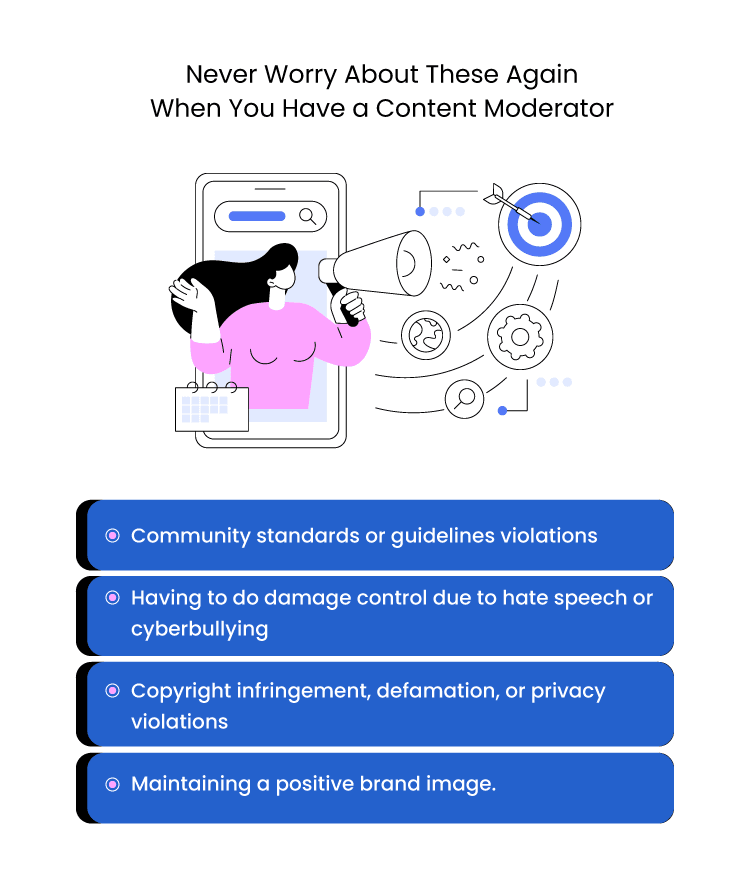
Social media platforms have specific guidelines and standards that all users must follow. Violating these guidelines can result in content being removed, accounts being suspended, or even legal action.
A social media content moderator can help ensure that all content posted on a brand’s social media accounts meets the standards of the platform. This includes reviewing and removing inappropriate or offensive content, such as hate speech or cyberbullying, to prevent damage to a brand’s reputation.
Reducing the Risk of Legal Issues
Social media can be a legal minefield for businesses. Lawsuits can arise from issues such as copyright infringement, defamation, or privacy violations.
Hiring someone to moderate social media content can help reduce the risk of legal issues. By reviewing all content before it is posted, you ca, ensure that it is compliant with relevant laws and regulations. This can help businesses avoid costly legal battles and maintain a positive brand image.
Building a Strong Brand Reputation
A brand’s reputation is everything in today’s competitive business world, and social media plays a significant role in shaping a brand’s reputation. A social media content moderator can help ensure that a brand’s social media presence is aligned with its values and goals, creating a positive image in the minds of customers.
Additionally, by removing offensive or inappropriate content, a content moderator can protect a brand’s reputation from being tarnished by negative content. Learn more about founder assistant pricing.
Duties of a Social Media Content Moderator
A content moderator is responsible for ensuring that a brand’s social media presence is managed effectively and its online reputation is protected.
A moderator plays a crucial role in creating a safe and inclusive environment for social media users, maintaining compliance with various regulations and policies, and enhancing the overall user experience.
A Social Media Content Moderator Reviews & Approves Posts
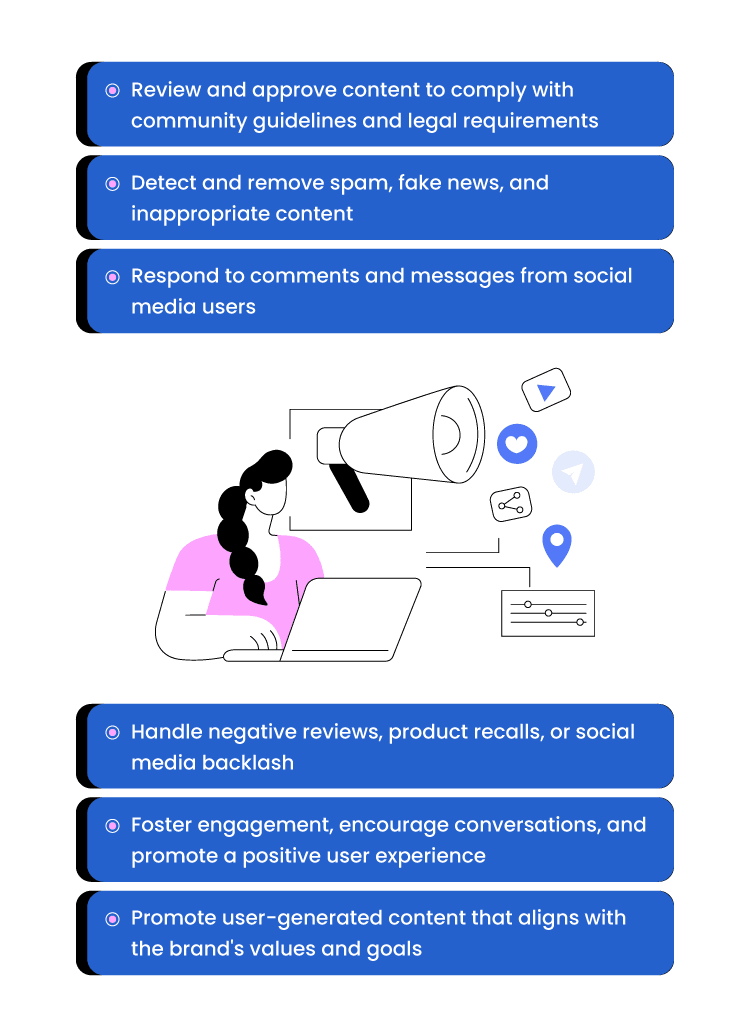
One of the primary duties of a content moderator is to review and approve all content that is posted on a brand’s social media accounts. This includes reviewing posts, images, videos, and comments to ensure that they are compliant with community guidelines and legal requirements. Content moderators must also be vigilant in detecting and removing spam, fake news, and inappropriate content, such as hate speech, cyberbullying, or offensive language.
They Respond to Comments & Messages from Users
Another important duty of a content moderator is to respond to comments and messages from social media users. They must be professional, polite, and helpful in their responses, addressing any concerns or questions that users may have.
Content moderators must also be trained in crisis management and be able to handle sensitive situations, such as negative reviews, product recalls, or social media backlash.
A Content Moderator Can Also Manage Communities
A content moderator is also responsible for managing the brand’s social media community. They must foster engagement, encourage conversations, and promote a positive user experience.
This involves creating and sharing relevant and engaging content, identifying and responding to user-generated content, and promoting user-generated content that aligns with the brand’s values and goals.
In conclusion, the duties of a content moderator are critical to the success of a brand’s social media presence. By reviewing and approving content, responding to comments and messages, and managing the brand’s social media community, content moderators can help businesses build a positive and trusted online reputation, foster engagement, and achieve their marketing and branding goals on social media platforms.
What Methods of Content Moderation Are There?
Content moderation is an essential part of managing a brand’s social media presence. There are different ways of performing content moderation, each with its own benefits and drawbacks. Understanding the different types of content moderation can help businesses choose the best approach for their social media strategy.
Pre-moderation
Pre-moderation involves reviewing all content before it is posted on a brand’s social media accounts. This approach ensures that all content meets community guidelines and legal requirements.
Typically the content editor or blog manager is the one who does pre-moderation. It is the last go-over they do before hitting ‘Post’ or ‘Schedule.’ In a perfect world, pre-moderation would be enough to ensure all content on a page is on-brand.
In reality, human error, dissatisfied reviews from customers, and user generated content can affect a brand’s image. What’s more, pre-moderation can be time-consuming and may delay publication of content.
Post-moderation
Post-moderation involves reviewing content after it has been published on a brand’s social media accounts. This approach is less time-consuming than pre-moderation and allows for the quick turnaround of time-sensitive information.
The downside is, post-moderation may result in inappropriate content being viewed by users before it is removed. It can also result in poorly vetted data going live, or information that could be misleading or downright harmful.
Reactive moderation
Reactive moderation involves reviewing content only when it has been reported by users or flagged by automated systems. This approach is less time-consuming than pre- or post-moderation and allows for quick response to inappropriate content.
Keep in mind, though, that reactive moderation may also result in inappropriate content being viewed by users. There might be a gap between when a post or comment goes live and the time it is reported.
Proactive moderation
Proactive moderation involves using automated systems and human moderators to proactively identify and remove inappropriate content before it is viewed by users. This approach is the most effective in preventing inappropriate content from being published on a brand’s social media accounts.
Hiring content moderators for social media isn’t as time-consuming or expensive as it seems. If you opt for managed content moderators from companies like Wing, you don’t have to think about screening, vetting, and interviewing candidates. Plus, getting a moderator from Wing won’t break the bank—hiring a part-time assistant starts at $499.
The different types of content moderation each have their own benefits and drawbacks. Businesses should consider their social media strategy and resources when choosing the best approach for their brand. Learn about outbound sales outsourcing.
Social Media Content Moderator vs Manager: What’s the Difference?
Should you hire a content moderator or a social media manager? Social media content moderators and managers are both essential for managing a brand’s social media presence. However, they have different roles and responsibilities. Understanding the differences between the two can help businesses determine the best approach for their social media strategy.
Social Media Content Moderator vs. Social Media Manager: Work Focus
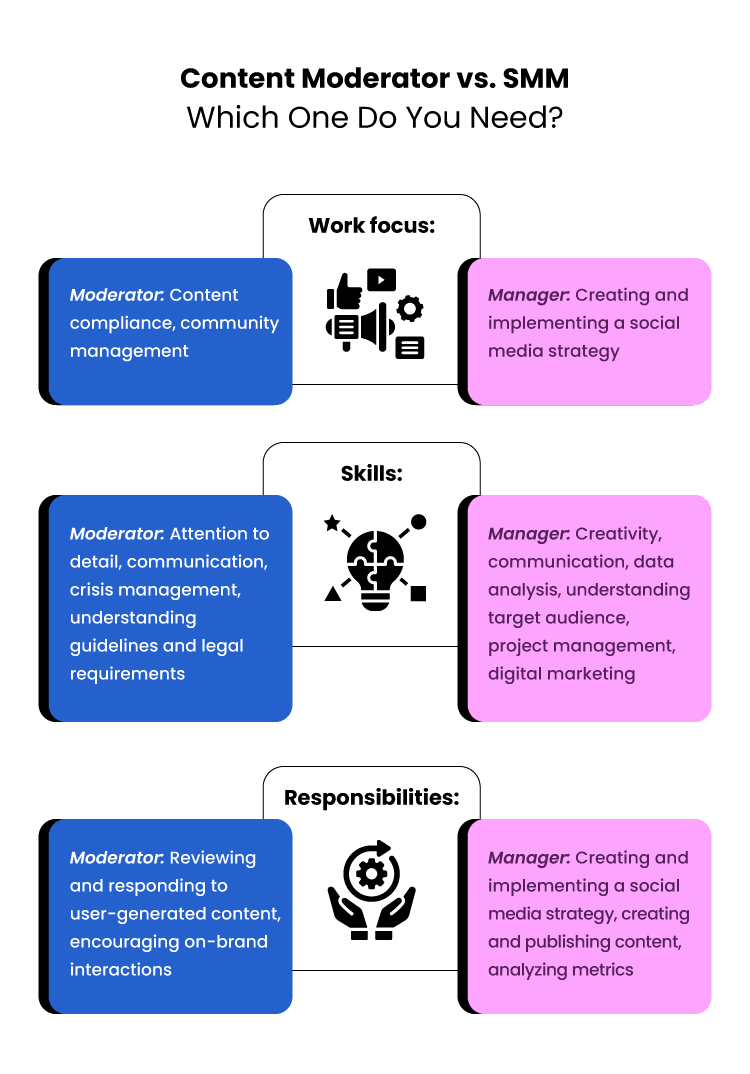
The primary focus of a social media content moderator is to ensure that any content complies with community guidelines and legal requirements. They are responsible for identifying and removing inappropriate content, responding to user-generated content, and managing the brand’s social media community.
On the other hand, the primary focus of a social media manager is to create and implement a social media strategy. They are responsible for creating and publishing content, as well as analyzing social media metrics.
Both moderators and social media managers may engage with social media users to promote brand awareness and customer loyalty. However, they work on different aspects of engagement. An SMM might create or launch a contest, giveaway, or live event. Meanwhile, a moderator might reply to comments and reviews on a brand page.
Moderator vs. Manager: Skills
The skills most important for social media content moderation include attention to detail, excellent communication skills, crisis management, and a good understanding of community guidelines and legal requirements. Content moderators must also be able to work efficiently under pressure and handle sensitive situations with tact and professionalism.
Social media managers, on the other hand, need creativity, excellent communication skills, data analysis, and a good understanding of the target audience. They must also have strong project management skills, be able to work collaboratively with other teams, and have a good understanding of digital marketing strategies.
Moderator vs. Manager: Responsibilities
The primary responsibility of a social media content moderator is to ensure that all content posted on a brand’s social media accounts meets community guidelines and legal requirements. They must also respond to user-generated content and manage the brand’s social media community.
A social media manager, on the other hand, is responsible for creating and implementing a social media strategy that aligns with the brand’s marketing and branding goals. They must also create and publish content, analyze social media metrics, and engage with social media users to promote brand awareness and customer loyalty.
Learn about marketing virtual assistant.
Hire a Managed, Dedicated Social Media Content Moderator from Wing
In all, hiring a social media content moderator can bring numerous benefits to businesses. By ensuring that content meets the standards of the platform, reducing the risk of legal issues and lawsuits, and building a strong brand reputation, a social media content moderator can help businesses achieve their marketing and branding goals on social media platforms.
Hire top-notch social media content moderators from Wing! We screen, interview, and manage remote talent so you can focus on your core responsibilities. Get in touch with us today to learn more!

Aya is Wing Assistant’s blog manager who writes about SaaS startups, marketing strategies, SEO, productivity, and remote business growth.